 tradella clef
About the author
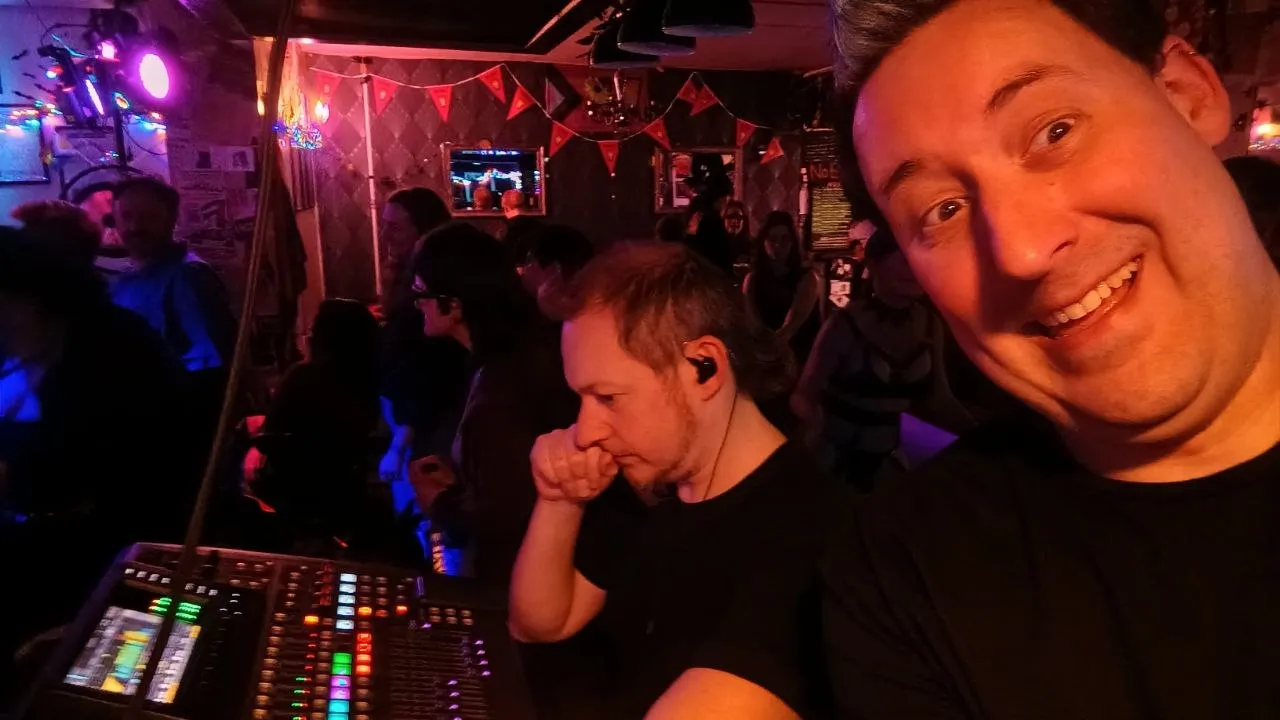
I’m Dan Hulme, a computer scientist and musician living in Cambridge, which has a lively accordion scene. I’ve played many instruments at different times in my life, but for the last ten years I’ve been learning to play accordion and writing accordion music, with an emphasis on looping and digital effects. I gig a few times a year under the name Tufty Indigo, and I help out other musicians by mixing and sound-engineering their gigs as a volunteer.
When I started playing accordion, I already knew piano, so I didn’t have to learn bass clef like people whose first instrument is accordion. Even so, I started to resent how much mental effort it takes to read bass when the instrument is doing most of the work for you.
I’ve developed the Stradella clef notation over a period of a few years, and I’ve been writing and playing parts in its current form since 2024. In a way, I’ve been trying to solve two problems:—
- Existing notation undermines Stradella bass’s labour-saving design, by making us live-translate complex symbols into simple button-presses.
- No music engraving systems understand the conventions of accordion sheets. LilyPond in particular prides itself on separating presentation (how to show the music) from meaning (what notes to play), but to engrave accordion parts you need to abuse octave marks and fingerings to show the chords, tying the music you input to one particular presentation.
Initially, I started using colour to augment the traditional “M”, “m”, “7” markings above the staff, but after playing from sheets with that format, I realised the letters had become unnecessary. And then when I observed that the top, middle, and bottom lines of a five-line staff had the same notes between them as the marked C, E, and A♭ buttons, the idea to write a tablature-like format came together.
I’ve been using the new notation for gigs and casual playing with a local group, and I’ve been evolving it over a few years into its present form. I believe that if Stradella clef became the standard, new players could get good at accordion without reading bass clef at all.
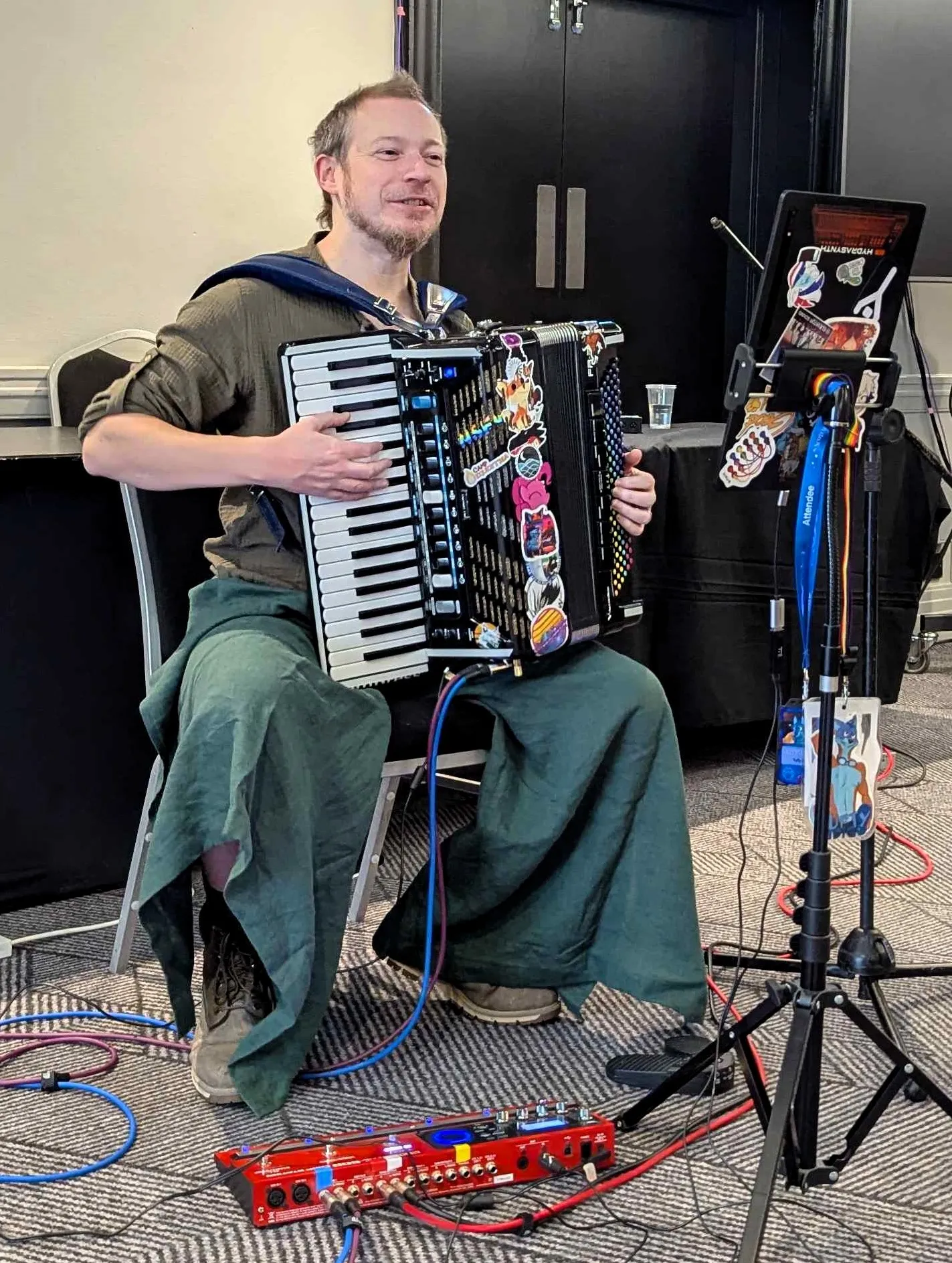
That’s just a dream for now — you still need to learn bass clef for existing sheets — but even so, I’ve found that I can play Stradella sheets much better, simply because I have more brainpower free to think about the quality and expression of my playing: bellows control, articulation, dynamics, etc. Expressive playing isn’t hard in itself, but it’s hard if you are having to concentrate on simply playing the right notes.